Welcome to our websites!
nybjtp

2026 Top Generator Set Types for Global Buyers?

The 2026 Top Generator Set Types for Global Buyers? The answer depends on load profile, fuel access, climate, and grid reliability.

The International Energy Agency’s Electricity 2025 report expects global data-centre electricity demand to reach about 945 TWh by 2030, more than double 2024 levels. This growth increases demand for dependable standby and prime-power systems. Diesel Generator Set models still dominate heavy-duty applications, including hospitals, construction sites, ports, and remote mines. However, natural-gas, hybrid, battery-supported, and renewable-fuel systems are gaining attention.

Market estimates vary. Grand View Research and MarketsandMarkets both identify steady Generator Set market expansion, but their forecasts differ by region, fuel category, and project definition. That difference matters. Buyers should not treat one market figure as universal truth.

Amory Lovins, a respected energy systems expert, stated, “The best energy is the energy you don’t use.” His principle also applies to generator selection. An oversized unit may burn more fuel, wet-stack during light loading, and increase maintenance costs. An undersized unit may fail when motors start or temperatures rise. Neither choice is ideal.

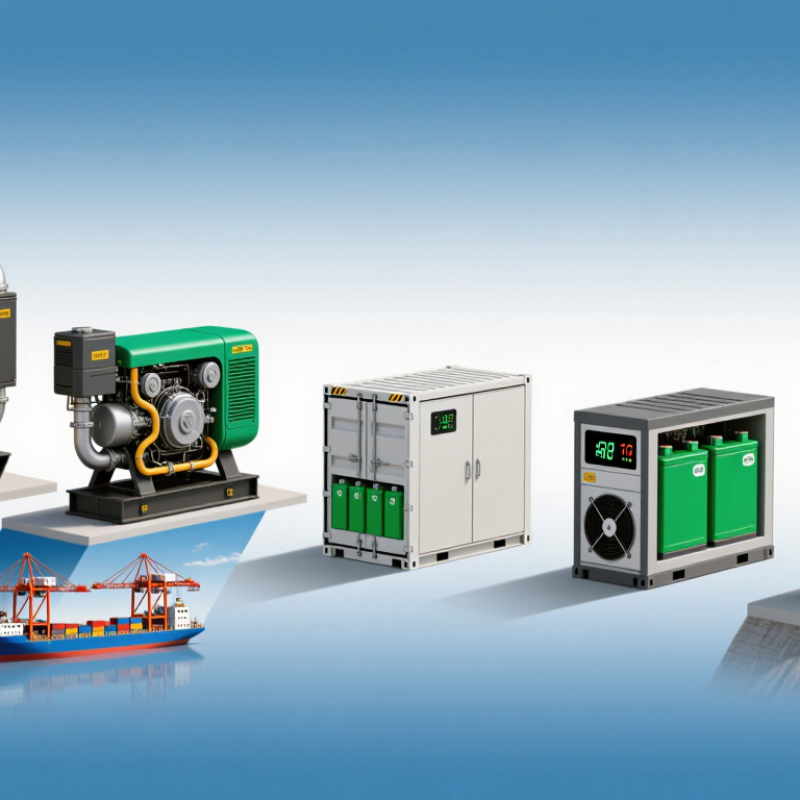
This guide compares major Generator Set types for global buyers in 2026. It examines diesel, gas, hybrid, battery-integrated, and renewable-fuel solutions. Each section considers output, fuel security, emissions, service access, and total ownership cost. Real sites are rarely perfect. A coastal backup unit may face salt corrosion, while a desert installation may struggle with cooling. Careful specification remains more valuable than fashionable technology.
2026 Top Generator Set Types for Global Buyers?

Generator Set Fundamentals: ISO 8528 Ratings, kW, kVA, and Duty Classes

2026 Top Generator Set Types for Global Buyers?

Generator set selection starts with the load, not the engine label. ISO 8528 ratings help buyers compare operating limits and expected performance. kW measures usable real power, while kVA describes apparent power. Their relationship depends on power factor: kW = kVA × PF. A 100 kVA set at 0.8 power factor delivers 80 kW. Motors, pumps, and transformers may demand extra starting power. That moment can change the required set size.

ISO 8528 duty ratings deserve close attention. COP suits steady loads running for long periods. PRP supports variable loads with changing operating hours. LTP covers limited-time operation, while ESP is intended for emergency standby use.

Performance classes also matter. G1 supports basic lighting and simple loads. G2 handles moderate voltage and frequency requirements. G3 suits equipment needing stronger stability. G4 addresses highly sensitive electronic systems. These terms are technical, but they prevent expensive misunderstandings.

Tips: Record running kW, starting kVA, power factor, altitude, and ambient temperature. Ask for the exact ISO 8528 rating, not only the advertised output. Leave practical headroom, but avoid extreme oversizing; light loading can reduce efficiency and create maintenance concerns. In field projects, I have seen a calculated load look correct until a pump started. A neat spreadsheet is not enough. Buyers should also verify fuel autonomy, transfer-switch timing, acoustic limits, and service access. One detail is easy to miss: future loads often arrive earlier than expected. Recheck the design before ordering.

Diesel Gensets: 50–3,000 kVA Systems for Prime and Standby Power

2026 Top Generator Set Types for Global Buyers?

Diesel Gensets: 50–3,000 kVA Systems for Prime and Standby Power

Diesel generator sets remain practical for factories, hospitals, construction sites, and remote facilities. They cover outputs from 50 to 3,000 kVA. Smaller units suit workshops and retail buildings. Larger systems support data centers, mines, and industrial plants.

Prime-power gensets can run for extended periods under changing loads. Standby units start during grid failures and usually operate for shorter periods. The choice depends on operating hours, load stability, fuel access, and local regulations. A site survey should record motor starting currents, altitude, ambient temperature, and future expansion. These details often change the required rating.

Do not size only from the average load. A 500 kVA set may struggle when pumps start together. An automatic transfer switch can reduce interruption time, but it still needs correct coordination. Fuel tanks, ventilation, exhaust routing, grounding, and noise control require equal attention. Maintenance access matters too. Technicians need space to inspect filters, coolant, belts, and batteries safely.

Real projects rarely match the first spreadsheet. Loads grow, climates differ, and fuel quality can vary. Engineers should verify calculations with measured data whenever possible. Emissions rules and electrical standards also differ between countries. Reliable procurement includes factory documentation, commissioning tests, spare-part planning, and clear service responsibilities. That is less exciting, but it prevents expensive surprises.

Natural-Gas Gensets: CHP Systems with Over 80% Total Efficiency

Natural-Gas Gensets: CHP Systems with Over 80% Total Efficiency

For global buyers, natural-gas gensets with combined heat and power can deliver more than electricity. CHP systems capture engine heat for hot water, steam, or building heating. In a well-matched installation, total efficiency can exceed 80 percent. This figure combines electrical output with useful recovered heat. It depends on steady demand, correct sizing, and effective heat recovery. A hotel may use recovered heat for showers and laundry, while a food plant may support washing lines or process water.

Real projects are less tidy. A genset running at low load may waste available heat and reduce financial performance. Gas quality, ambient temperature, maintenance access, and local grid rules also affect results. Buyers should request verified electrical efficiency, thermal output, emissions data, and testing conditions. Payback estimates deserve careful review. They can look impressive on paper.

Tips: Match the unit to the site’s year-round heat demand. Measure hot-water or steam use before selecting capacity. Confirm whether backup boilers remain necessary. Ask for commissioning records and service intervals. Leave space around the engine for safe inspection and future repairs. A smaller, heavily loaded system may outperform a larger unit operating below its ideal range. Also, review noise control and fuel-supply reliability early. Small oversights become expensive.

2026 Top Generator Set Types for Global Buyers? - Natural-Gas Gensets: CHP Systems with Over 80% Total Efficiency

Generator Set Type Typical Electrical Output Electrical Efficiency Recoverable Heat Total CHP Efficiency Useful Heat Temperature Best-Fit Applications Key Buyer Considerations
Lean-Burn Reciprocating Gas Engine CHP 0.5–5 MWe per unit 38–44% (LHV) Hot water, low-pressure steam, and limited exhaust heat; typically 40–48% of fuel energy is recoverable 80–90% Hot water: approximately 70–95°C; exhaust gas can support higher-temperature heat recovery Hotels, hospitals, district-energy plants, food processing, greenhouses, and commercial buildings Strong part-load performance, fast start capability, modular installation, and relatively high maintenance requirements
Large-Bore Reciprocating Gas Engine CHP 5–20+ MWe per unit 42–48% (LHV) High-volume jacket-water and exhaust-gas recovery; commonly 38–46% of fuel energy is available as useful heat 82–92% Hot water: approximately 80–100°C; steam generation is possible with suitable heat-recovery equipment Industrial facilities, district heating, wastewater treatment, and large-scale continuous-load sites High electrical efficiency and good fuel utilization; requires adequate gas supply, service access, and heat demand
Gas Turbine CHP 1–40 MWe per unit 25–40% (LHV) Exhaust heat is well suited to heat-recovery steam generators; useful heat commonly reaches 45–60% of fuel energy 75–90% Exhaust-based systems can produce hot water, saturated steam, or superheated steam Refineries, chemical plants, paper mills, district-energy systems, and sites with continuous steam demand Best suited to steady high-load operation; efficiency is affected by ambient temperature, altitude, and part-load operation
Microturbine CHP 30–500 kWe per module 25–33% (LHV) Primarily exhaust-gas heat; useful heat recovery is generally 45–55% of fuel energy 70–85% Hot water and low-pressure steam, generally below approximately 250°C without additional systems Small commercial buildings, telecom facilities, remote sites, retail properties, and light industry Compact design, low vibration, and low routine maintenance; electrical efficiency is lower than that of large reciprocating engines
Multi-Engine Modular CHP Plant 1–20+ MWe total plant capacity 40–48% (LHV), depending on engine size and loading Heat recovery can be staged to match hot-water or steam demand; commonly 40–48% of fuel energy is recoverable 82–92% Hot water: approximately 70–100°C; steam is available with exhaust-gas heat recovery Campuses, industrial parks, data centers, hospitals, and district-energy networks with variable demand Flexible capacity control, improved availability during maintenance, and easier expansion; requires coordinated controls and heat-load planning

Technical basis: Values are representative engineering ranges for natural-gas CHP systems using the lower heating value (LHV) of the fuel. Actual performance depends on engine loading, gas composition, ambient conditions, heat-recovery design, site elevation, and the required hot-water or steam conditions. Total CHP efficiency is calculated as useful electrical output plus useful recovered heat divided by natural-gas input.

Hybrid Battery-Gensets: Fuel Savings of Up to 30% at Variable Loads

For global buyers, hybrid battery-gensets are becoming practical for changing power demand. They combine an engine generator with a battery, inverter, and control system. At a construction site, the battery can cover short peaks and quiet periods. The engine then runs closer to its efficient load range. This reduces unnecessary idling, where conventional sets consume fuel without useful output. Field results can reach up to 30% fuel savings at variable loads. The number is not automatic.

Actual performance depends on load patterns, battery size, temperature, and maintenance quality. A site drawing 20% power overnight needs different capacity than one using cranes intermittently. Buyers should request logged fuel data, not only brochure estimates. Compare liters consumed per operating hour across matching duty cycles. Check battery cooling, inverter ratings, start response, and generator synchronization. These details show whether the system can handle motor starting currents and sudden load changes. Small details matter.

Commissioning lessons show that control settings strongly affect results. Poor settings may cause frequent engine starts, reducing savings and increasing wear. Operators need training for alarms, charge limits, and scheduled inspections. Hybrid systems can lower noise and local emissions, but installation must follow applicable safety requirements. I would treat 30% as an upper reference, not a promise. Measure the first month carefully.

2026 Top Generator Set Types for Global Buyers? – Hybrid Battery-Gensets: Fuel Savings of Up to 30% at Variable Loads

Representative fuel-use comparison for a 100 kW diesel generator set operating at different load levels. Battery assistance reduces low-load engine runtime and improves fuel efficiency, with the largest potential savings occurring at light and variable loads.

Data shown in liters per hour and based on representative engineering operating values for generic, non-branded equipment. Actual results vary with load profile, battery capacity, ambient conditions, maintenance, and control strategy.

Buyer Guide: Compare NFPA 110, EPA, EU Stage V, Fuel, and Lifecycle Cost

2026 Top Generator Set Types for Global Buyers?

NFPA 110 defines emergency power performance, not exhaust emissions. It addresses starting time, transfer reliability, fuel systems, and operational testing. The 2022 edition remains important for hospitals, factories, and critical facilities. EPA Tier 4 Final rules control emissions from nonroad diesel engines in the United States. EU Stage V applies similarly strict limits across many European applications, including particulate emissions. These standards are not interchangeable. A compliant engine may still fail a site’s emergency-power testing requirements.

Fuel choice changes both risk and lifetime cost. Diesel usually offers strong energy density and easier long-duration storage. Natural gas can reduce onsite tank management, but supply interruptions need careful review. Biodiesel blends may lower some emissions, yet cold-weather performance and storage stability require verification. The U.S. Energy Information Administration reports diesel contains about 137,000 Btu per gallon. Actual generator efficiency varies widely. Cheap purchase prices can mislead.

Tips: Request a 10-year lifecycle model. Include fuel, load-bank testing, oil, filters, permits, technician visits, and disposal. Ask for documented EPA or EU conformity evidence. Check NFPA 110 testing intervals with the site authority. A smaller generator running near its rated load may outperform a larger unit running lightly. That detail is often missed. No model is perfect. Reliability assumptions should be challenged before signing.