Reliable backup power begins with a realistic view of risk. Uptime Institute’s 2024 outage analysis found that 54% of surveyed organizations reported their most recent significant outage cost more than $100,000. That figure is a reminder: a generator is not just a machine beside a building. It is a system whose capacity, fuel supply, controls, and maintenance plan must fit the site. Small details matter. A pump starting at the same moment as a ventilation fan can change the load calculation.
Choosing a Cummens Generator Set means looking beyond advertised kilowatts. Check continuous and standby ratings, starting loads, operating conditions, service access, and the equipment’s required runtime. Then confirm the assumptions with a qualified power-systems professional and documented site data. A wrong estimate can look fine on paper. It may fail when several loads start together. This guide examines seven practical selection factors, from sizing and fuel considerations to installation and ongoing care. The materials supplied do not include a verifiable quotation from a named generator expert, so I will not invent one; expert advice should be attributed only when its source can be checked.
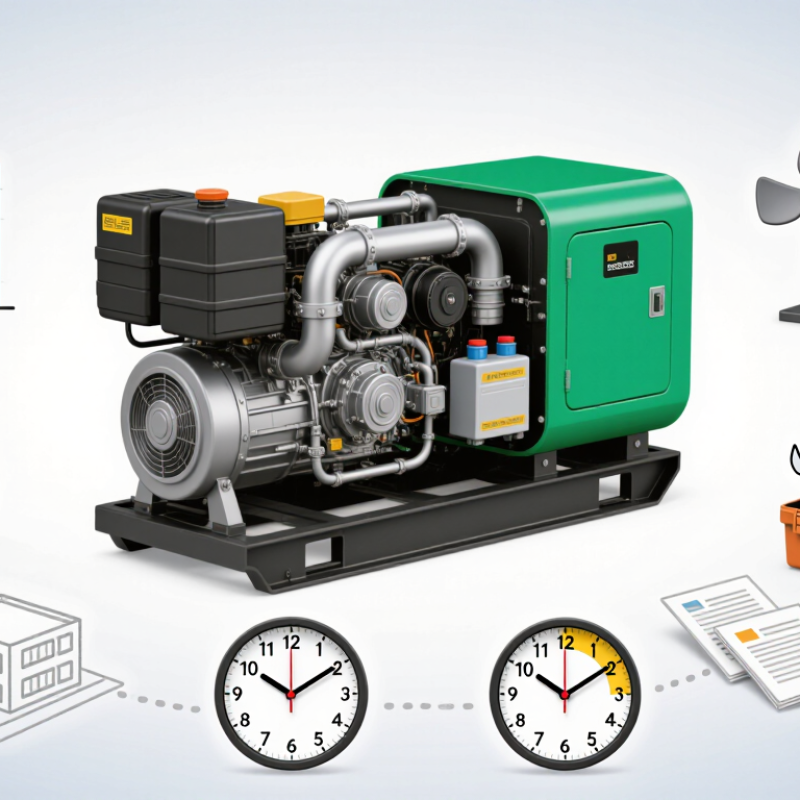
Before choosing a generator set, measure the electricity your site truly needs. List every essential load, including pumps, refrigeration units, lighting, controls, and ventilation. Record each device’s running watts and starting demand. Motors can draw three times their normal current during startup. That short surge often causes poor performance when ignored. Think beyond today’s equipment. Future expansion matters.
Tip: Build a load schedule from actual measurements, not assumptions. A clamp meter and several days of monitoring can reveal unusual peaks. Note the time, duration, and frequency of each peak. A workshop may need high power only during morning production. A clinic may require stable power around the clock. These profiles require different generator sizing decisions.
Avoid sizing the set exactly to the calculated total. Leave practical capacity for temperature, altitude, aging equipment, and unexpected loads. However, excessive oversizing can create light-load operation, wet stacking, and inefficient fuel use. It is a balance, not a perfect formula. I have seen estimates fail because one “small” compressor started beside a large motor. Recheck the sequence of automatic transfers and motor starts. Ask a qualified electrical professional to verify voltage, phase, frequency, and protection requirements. Keep records of tested loads, because memory becomes unreliable during an outage.
This illustrative 24-hour profile shows hourly facility demand. Use measured operating data to identify typical and peak loads; account separately for motor-starting surges and site conditions when selecting generator capacity.
Start with a load list, not the generator’s advertised peak rating. Record the running watts or amperes of every device expected to operate at the same time, including lights, pumps, refrigeration, and control equipment. Then flag motor-driven loads. A well pump or air compressor may draw several times its normal current for a brief moment while starting. That surge can trip an undersized set, even when the total running load looks modest. Check equipment nameplates and, when available, starting-current data. Small detail, big difference.
Estimate what must start together, not just what will run afterward. If several motors could start at once, include their combined starting demand; otherwise, consider a practical startup sequence. Compare both kW and kVA requirements, since power factor affects how electrical loads use generator capacity. Allow for site conditions such as high altitude or hot temperatures, which may reduce available output. Be honest about essential loads. People often add convenient equipment later, and an early estimate can miss that. A qualified technician can verify the calculations against the equipment specifications before you choose a set.
Fuel choice starts with supply, not brochure claims. A rural site with a bulk diesel tank has different risks from a rooftop unit relying on delivered propane. The U.S. Energy Information Administration’s Monthly Energy Review, Table 3.5, lists distillate fuel oil at about 137,000 Btu per gallon, versus roughly 91,000 for propane. That measures stored heat, not guaranteed electrical output. Conversion losses, temperature, and engine loading change runtime. Check winter fuel treatment, tank access, spill control, and delivery lead times before selecting a configuration. Small details matter.
Then match the set to its duty cycle. The U.S. Department of Energy’s Reciprocating Engine CHP fact sheet reports electrical efficiency of roughly 25–50%, depending on engine size and configuration. Actual results vary. For standby service, account for the largest credible starting load, such as a pump motor starting while lighting remains on. For prime or continuous service, use an hourly load profile, annual operating hours, and maintenance windows. Ask for output derating at the site’s elevation and hottest expected temperature. Check ventilation, exhaust routing, and room for service access. A tidy spreadsheet can still miss a delivery delay or an unexpectedly long outage. It happens.
Before comparing price, confirm the generator’s emissions certification matches its engine rating, fuel, and operating duty. U.S. EPA rules under 40 CFR Part 60, Subpart IIII, set requirements for many stationary compression-ignition engines. Ask for the emissions certificate and applicable maintenance schedule, then check local permitting requirements. A label alone may not tell the whole story.
Small details matter. CDC estimates that more than 400 people in the United States die each year from unintentional, non-fire carbon monoxide poisoning. NIOSH lists carbon monoxide’s immediately dangerous to life or health concentration as 1,200 ppm. Keep exhaust outlets away from doors, windows, and air intakes, and have a qualified professional review airflow and discharge direction. A site sketch is easy to trust; real walls and obstructions can change the plan. Check clearances for cooling air, maintenance access, fuel connections, and safe service routes. Confirm the foundation can support the unit and manage vibration. Have a qualified electrician verify grounding, transfer equipment, and load connections. Commission the system under load, record the results, and correct problems before an outage exposes them.
When comparing generator sets, price the support behind the equipment. Ask for written response times, local technician coverage, stocked parts, and after-hours labor rates. A phone number is not a service plan. Check what the warranty excludes, including travel, consumables, and damage linked to poor maintenance. The U.S. Federal Energy Management Program’s life-cycle cost guidance includes purchase, operation, maintenance, repair, and replacement costs—not just the initial price. Apply that framework to expected run hours, fuel use, scheduled servicing, and major-component repairs. Small assumptions can shift the result.
Tips: Request a sample maintenance schedule and itemized service quote. Confirm who performs load-bank testing and how quickly critical parts can arrive. Compare warranty duration and coverage line by line. Keep a little skepticism: projected savings depend on actual operating hours and site conditions.
Service reliability has a measurable business impact. Uptime Institute’s 2024 Annual Outage Analysis reported that 54% of surveyed organizations with a significant outage said their most recent event cost more than $100,000; 16% reported costs above $1 million. Those figures describe outages, not generator failures, but they show why response capability matters. Ask suppliers for documented service performance and references from comparable installations. Then model fuel and maintenance costs using your own load profile, not a best-case estimate. A neat spreadsheet can still be wrong.
Use the same generator rating, operating profile, location, and evaluation period when comparing quotations. Warranty coverage, service availability, and maintenance requirements vary by model, application, and region, so verify all terms in writing.
| Tip | What to Compare | Useful Evidence to Request | How to Evaluate It | |
|---|---|---|---|---|
| 1 | Match the rating to the load | Standby versus prime rating, rated output, voltage, frequency, and the load’s starting requirements. | A load analysis showing expected running load, motor-starting demand, power factor, and any planned future additions. | Compare quotations at the same duty rating and site conditions. Do not treat standby and prime ratings as interchangeable. |
| 2 | Check local service capability | Technician coverage, parts availability, service hours, travel distance, and support for commissioning and troubleshooting. | A written service plan identifying the responsible service provider, contact process, local parts arrangements, and any response-time commitments. | Confirm who provides support at the installation address and whether stated response times are contractual or only estimates. |
| 3 | Read the warranty terms | Coverage period, start date, operating-hour limits, covered components, exclusions, and claim procedure. | The complete warranty document for the quoted configuration, including separate terms for the engine, alternator, controls, and supplied accessories where applicable. | Compare both calendar duration and hour limits. Check whether labor, travel, consumables, and consequential costs are included or excluded. |
| 4 | Estimate lifecycle costs | Purchase and installation, fuel, scheduled maintenance, repairs, parts, testing, and end-of-life costs. | An itemized cost estimate using a stated ownership period, annual operating hours, expected load, local fuel price, and maintenance schedule. | Compare total cost under identical assumptions—not purchase price alone. Separate quoted costs from assumptions and estimates. |
| 5 | Compare fuel consumption fairly | Fuel-use data at relevant load levels, fuel type, tank capacity, and expected operating hours. | Manufacturer or supplier fuel-consumption data at stated load points, plus a calculation based on the site’s expected duty cycle. | Use the same load profile and fuel-price assumption for every option. Avoid comparing figures measured at different loads or conditions. |
| 6 | Review maintenance requirements | Service intervals, inspection tasks, required fluids and filters, labor access, and any application-specific maintenance. | The operation and maintenance schedule for the exact model, including tasks based on both operating hours and elapsed time. | Price routine service using local labor and parts costs. Confirm who performs the work and whether maintenance affects warranty eligibility. |
| 7 | Assess installation and compliance | Site preparation, ventilation, exhaust, noise limits, emissions requirements, fuel storage, transfer equipment, and commissioning. | A site-specific scope of work, applicable local permitting requirements, commissioning checklist, and a clear list of customer-supplied items. | Include installation and compliance costs in the comparison. Confirm responsibility for permits, testing, operator training, and handover documents. |
Comparison reminder: Request written, model-specific information and verify applicable requirements with the supplier and local authorities before purchase. Actual performance, warranty coverage, service response, and lifecycle costs depend on configuration, operating conditions, location, and contract terms.